
There’s the classic saying in photo and video; “don’t work with animals or kids”. But we’ve got some tips to help you work with dogs! It’s a more specialised form of photography than most people expect, with understanding their body language and being able to quickly adapt. Here are some of the best tips for dog photography and how to get good results!
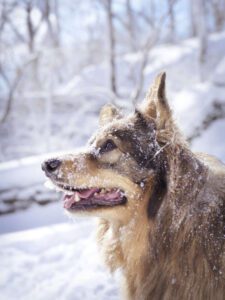
Photo credit: Rachel McKenna
Being Organised
Whether it’s a studio or outdoors, having the location of the shoot organised and gear set up prior to the dog’s arrival is a great way to get started. Asking their owner prior to the shoot with what tricks their dog likes to do, their favourite words and treats, and what settings their dog feels safest in is always good knowledge to have on hand. Organising a shot list with this information as well will keep the schedule running smoothly and be able to retain the dog’s attention, as they may get bored waiting for the next idea to come through if it hasn’t been planned. Having treats and toys on hand helps them realise that you’re their friend, and speaking to them in a slow and calm voice will help settle nerves as well.
Letting a dog do what they do naturally is a great way to start, as you can let them settle into the setting and get used to having a camera in their vicinity. Whether it’s throwing a ball or toy for them, or getting them to show off their favourite trick will help their personality shine as well!
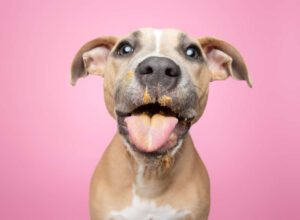
Photo credit: Greg Murray
The Settings
Most dogs move very quickly and it’s difficult to anticipate their movements, so autofocus is a must! Especially if the dog is playing fetch and running around, you don’t want to miss out shots because of slow manual focussing.
There are two schools of thought with how aperture should be set when it comes to dogs; having the eyes as the main focussing point, or ensuring that from the ears to the tip of the nose is in focus. The answer to which one is best is on how much light is available, and what your style is. Photography is such a subjective thing, so often there are lots of contradicting answers to the same question. But the most important thing is that the eyes are in focus, as that’s where we are able to read emotion.
Shutter speed needs to be fast! Fast enough to have no motion blur, especially when the dog is running around chasing a ball. Having a sharp action shot of a dog is what professionals strive for, as motion blur in animal photography can be seen as messy. Most photos of dogs that we see are super sharp with no motion blur, and this is often achieved with shooting 1/500-1/1000 shutter speed (observing the exposure triangle to see what works best with the environment you’re in). ISO will need to be adjusted based on the shutter speed being used. Using ISO 200-400 will avoid introducing noise into the image, but shooting with ISO 400-800+ may be needed when shooting in the shade or in shadow. Generally, it’s best to have a nice even light to get flattering images of pets.

Photo credit: Chris Van Riel
Perspective
When something is shorter than us, often we make the mistake of looking down on it, rather than getting on its level. Moving down to eye level for dogs is often the difference between an amateur photo and a professional one. Here are some examples form That Tog Spot of looking down versus being at eye level with the pet.


Being at the same level as the dog is more dynamic than looking down. You can see their personality and eyes more clearly, making it more about the dog themselves than what environment they’re in. That Tog Spot has great examples on beautiful dog photos and what works well!

Photo credit: Craig Turner
Most Importantly, Be Patient
Being patient is the most important thing to remember when taking photos of dogs. We don’t speak the same language as them, so being able to read their body language and knowing when they’re comfortable versus when they’re not is incredibly important. Photographer Craig Turner said; “If you are reading this and animal/pet photography is something that you’d like to get into a little more, the number one piece of advice I can give is that you learn how to understand and read the body language of your subjects.” An upset dog in a photo is not something nice to look at, and a bored dog in a photo won’t be as good as a happy one! Don’t be afraid to take breaks or try new things as well if the dog is not responding positively, since your goal is to capture happy photos and good memories that the dog has had. If it’s just not working out on the day, it’s okay to reschedule and try a different setting where the dog may feel safer. You have to have the dog’s best interests at heart, and we all have off days, so doing what’s best by the dog needs to be at the forefront of your mind.
Enjoy taking happy dog photos and creating good memories with your furry friends!


